Free Software SupporterIssue 76, July 2014 Welcome to the Free Software Supporter, the Free Software Foundation's monthly news digest and action update -- being read by you and 81,589 other activists. That's 1,228 more than last month! View this issue online here: https://fsf.org/free-software-supporter/2014/july Encourage your friends to subscribe and help us build an audience by adding our subscriber widget to your web site.
Miss an issue? You can catch up on back issues at https://www.fsf.org/free-software-supporter. #El Free Software Supporter está disponible en español. Para ver la versión en español haz click aqui: https://fsf.org/free-software-supporter/2014/julio Para cambiar las preferencias de usuario y recibir los próximos números del Supporter en castellano, haz click aquí: https://crm.fsf.org/civicrm/profile/create?gid=34&reset=1 Le Free Software Supporter est disponible en français. Pour voir la version française cliquez ici: https://fsf.org/free-software-supporter/2014/juillet Pour modifier vos préférences et recevoir les prochaines publications du Supporter en français, cliquez ici: https://crm.fsf.org/civicrm/profile/create?gid=34&reset=1 TABLE OF CONTENTS
FSF congratulates UK Government on choosing Open Document FormatFrom July 29th If you live in the UK, you'll soon be able to fill out government paperwork with your freedoms intact. The British government announced last week that Open Document Format (ODF), HTML, and PDF will be the official file formats used by all government agencies.
Interview with Tox.imFrom July 21st In the latest installment of our Licensing and Compliance Lab's series on free software developers who choose GNU licenses for their works, we conducted an email-based interview with David Lohle from the Tox project, an all-in-one communication platform and protocol that ensures users full privacy and secure message delivery. Introducing Tyler Livingston, a summer Licensing Team internFrom July 21st Tyler Livingston is one of the Licensing Team's summer interns. In this post he discusses the importance of free software and his personal interests. Tell the FCC: Net Neutrality is crucial to free softwareFrom July 14th Net neutrality, the principle that all traffic on the Internet should be treated equally, is crucial for free software's continued growth and success. The FCC has asked members of the public, along with industry leaders and entrepreneurs, to tell it why Internet Service Providers should be banned from traffic discrimination. Seattle free software event this fall: Call for Participation now openFrom July 1st The Seattle GNU/Linux Conference (SeaGL), a free software conference taking place on October 24 and 25, has just announced Karen Sandler, executive director of Software Freedom Conservancy, as a keynote speaker and opened its Call for Participation. Welcome Jessica Tallon, GNU MediaGoblin's second full-time hireBy Deb Nicholson and Chris Webber, from July 28th Jessica Tallon, who originally joined GNU MediaGoblin last year as part of the Outreach Program for Women, has recently been working on federation support in the project. European Commission distorts market by refusing to break free from lock-inBy FSF Europe, from July 8th The European Commission has recently renewed its commitment to a proprietary desktop and secret file formats. The Commission is refusing to get serious about breaking free from vendor lock-in, and is ignoring all available alternatives. In doing so, the EU's civil service fails to practice what it preaches. Join the FSF and friends in updating the Free Software DirectoryFrom July 30th Tens of thousands of people visit directory.fsf.org each month to discover free software. Each entry in the Directory contains a wealth of useful information, from basic category and descriptions to version control, IRC channels, documentation, and licensing. The Free Software Directory has been a great resource to software users over the past decade, but it needs your help staying up-to-date with new and exciting free software projects. To help, join our weekly IRC meetings on Fridays. Meetings take place in the #fsf channel on irc.gnu.org, and usually include a handful of regulars as well as newcomers. Everyone's welcome. The next meeting is Friday, August 1 from 2pm to 5pm EDT (18:00 to 21:00 UTC). Details here: After this meeting, you can check https://www.fsf.org/events to see the rest of August's weekly meetings as they are scheduled. LibrePlanet featured resource: Community toolkitEvery month on LibrePlanet, we highlight one resource that is interesting and useful -- often one that could use your help. For this month, we are highlighting our Community toolkit, which collects information about software that can be used by nonprofits, community groups, and individuals to advance the cause of free software. You are invited to adopt, spread and improve this important resource. Do you have a suggestion for next month's featured resource? Let us know at campaigns@fsf.org. GNU Spotlight with Karl Berry: 18 new GNU releases!18 new GNU releases in the last month (as of July 26, 2014):
To get announcements of most new GNU releases, subscribe to the info-gnu mailing list: https://lists.gnu.org/mailman/listinfo/info-gnu. Nearly all GNU software is available from https://ftp.gnu.org/gnu/, or preferably one of its mirrors (https://www.gnu.org/prep/ftp.html). You can use the url http://ftpmirror.gnu.org/ to be automatically redirected to a (hopefully) nearby and up-to-date mirror. This month, we welcome Mose Giordano as a new co-maintainer of AUC-TeX, James Cloos as a new co-maintainer of a2ps (following his work on GNU enscript and trueprint), and Assaf Gordon as the author and maintainer of the new package datamash. Thanks to all. Also, please consider attending the GNU Hackers' Meeting https://www.gnu.org/ghm/, in Munich this year, August 15-17; attendance is gratis, but pre-registration is essential (and needs to be done immediately). A number of GNU packages, as well as the GNU operating system as a whole, are looking for maintainers and other assistance: please see https://www.gnu.org/server/takeaction.html#unmaint if you'd like to help. The general page on how to help GNU is at https://www.gnu.org/help/help.html. To submit new packages to the GNU operating system, see https://www.gnu.org/help/evaluation.html. As always, please feel free to write to me, karl@gnu.org, with any GNUish questions or suggestions for future installments. GNU Toolchain updateFrom July 14th The GNU toolchain refers to the part of the GNU system which is used for building programs. These components of GNU are together often on other systems and for compiling programs for other platforms. This month features updates to binutils and GCC, including a new test coverage program called gcov-tool. Richard Stallman's speaking scheduleFor event details, as well as to sign-up to be notified for future events in your area, please visit https://www.fsf.org/events. So far, Richard Stallman has the following events in July:
Other FSF and free software events
Thank GNUs!We appreciate everyone who donates to the Free Software Foundation, but we'd like to give special recognition to the folks who have donated $500 or more in the last month. This month, a big Thank GNU to:
You can add your name to this list by donating at https://donate.fsf.org. Take action with the FSFContributions from thousands of individual members enable the FSF's work. You can contribute by joining at https://www.fsf.org/join. If you're already a member, you can help refer new members (and earn some rewards) by adding a line with your member number to your email signature like: I'm an FSF member -- Help us support software freedom! https://www.fsf.org/jf?referrer=2442 The FSF is also always looking for volunteers (https://www.fsf.org/volunteer). From rabble-rousing to hacking, from issue coordination to envelope stuffing -- there's something here for everybody to do. Also, head over to our campaign section (https://www.fsf.org/campaigns) and take action on software patents, DRM, free software adoption, OpenDocument, RIAA and more. #Copyright © 2014 Free Software Foundation, Inc. This work is licensed under the Creative Commons Attribution 3.0 Unported License. To view a copy of this license, visit https://creativecommons.org/licenses/by/3.0/. --Follow us on GNU social | Subscribe to our blogs via RSS | Join us as an associate member Sent from the Free Software Foundation, 51 Franklin Street Floor 5 Boston, Massachusetts 02110-1301 United States Unsubscribe from this mailing list. Stop all email from the Free Software Foundation, including Defective by Design, and the Free Software Supporter newsletter. |
Thursday, July 31, 2014
UK Government chooses Open Document Format | Free Software Supporter - Issue 76, July 2014

Monday, July 14, 2014
Tell the FCC: Net Neutrality is crucial to free software
| Dear free software supporter, The Federal Communications Commission (FCC) needs to be convinced that Net Neutrality is worth saving. The agency has asked members of the public, along with industry leaders and entrepreneurs, to tell it why Internet Service Providers should be banned from traffic discrimination. This comment window is one of the best opportunities we've had to make an impact. Comments are due tomorrow, July 15, 2014. Submit your statement in support of Net Neutrality right away using the Electronic Frontier Foundation's free software commenting tool. Net neutrality, the principle that all traffic on the Internet should be treated equally, should be a basic right for Internet users. It's also crucial for free software's continued growth and success. Here's why: Media distribution giants that use Digital Restrictions Management and proprietary software to control what's on your computer have also been fighting for years to control the network. Without Net Neutrality, DRM-laden materials could be easier to access, while DRM-free competitors could be stuck in the slow lane. Web-based free software projects like GNU MediaGoblin could also suffer the slow treatment while competitors like YouTube shell out big bucks for speedier service. The bottom line--an Internet where the most powerful interests can pay for huge speed advantages could push smaller free software projects right off the map and make it harder for decentralized projects to flourish. That's not good for free software, and it's not good for other innovative voices for change in the digital world. Tell the FCC: Net Neutrality will help free software flourish Activists have worked for years to get to this moment. Over the last several months, things have really heated up--with Internet freedom lovers camping out outside of the FCC, serenading FCC Chairman Tom Wheeler with a special version "Which Side Are You On?" The comments flooding in to the agency have jammed the phones and crashed the FCC's email servers. And yet, Chairman Wheeler still thinks he can get away with ignoring overwhelming public outrage and wrecking the free Internet. We have to keep up our historic momentum in order to convince a cable-industry sympathizer like Chairman Wheeler to listen to the public and protect Net Neutrality. The deadline for comments is tomorrow, July 15, 2014. Don't delay--comment now! Thanks for all you do, Libby Reinish Not in the US? Update your location information. You can read this post online at https://fsf.org/blogs/community/tell-the-fcc-net-neutrality-is-crucial-to-free-software. --Follow us on GNU social | Subscribe to our blogs via RSS | Join us as an associate member Sent from the Free Software Foundation, 51 Franklin Street Floor 5 Boston, Massachusetts 02110-1301 United States Unsubscribe from this mailing list. Stop all email from the Free Software Foundation, including Defective by Design, and the Free Software Supporter newsletter. |
Monday, June 30, 2014
Free Software Supporter - Issue 75, June 2014
Free Software SupporterIssue 75, June 2014 Welcome to the Free Software Supporter, the Free Software Foundation's monthly news digest and action update -- being read by you and 80,361 other activists. That's 807 more than last month! View this issue online here: https://fsf.org/free-software-supporter/2014/june Encourage your friends to subscribe and help us build an audience by adding our subscriber widget to your web site.
Miss an issue? You can catch up on back issues at https://www.fsf.org/free-software-supporter. #El Free Software Supporter está disponible en español. Para ver la versión en español haz click aqui: https://fsf.org/free-software-supporter/2014/junio Para cambiar las preferencias de usuario y recibir los próximos números del Supporter en castellano, haz click aquí: https://crm.fsf.org/civicrm/profile/create?gid=34&reset=1 Le Free Software Supporter est disponible en français. Pour voir la version française cliquez ici: https://fsf.org/free-software-supporter/2014/juin Pour modifier vos préférences et recevoir les prochaines publications du Supporter en français, cliquez ici: https://crm.fsf.org/civicrm/profile/create?gid=34&reset=1 TABLE OF CONTENTS
Reset the Net with our Email Self-Defense GuideFrom June 5th This month we joined the Reset the Net day of action by releasing Email Self-Defense, a guide to personal email encryption to help everyone, including beginners, make the NSA's job a little harder. The Email Self-Defense Guide will lead you all the way through the process of sending and receiving your first encrypted mail. We're excited to announce that volunteers are currently working on translations of the guide and infographic into ten languages. Translations in German, Brazilian Portuguese, French, Russian, Turkish, and Japanese have been published, with more languages coming soon. Blog posts:
Press release: Guide: Join the FSF and allies: strengthen the Tor anti-surveillance networkFrom June 5th We're joining our allies at the Electronic Frontier Foundation (EFF) in kicking off the Tor Challenge, an effort to strengthen the global Tor network that protects Internet traffic from surveillance. Start a relay and register it with the Tor Challenge! It's easy and works on all operating systems, including the best one — GNU/Linux. US Supreme Court makes the right decision to nix Alice Corp. patent, but more work needed to end software patents for goodFrom June 19th On June 19, the United States Supreme Court unanimously ruled a prominent software patent invalid in the case of Alice Corp. v. CLS Bank, saying that implementing an abstract idea on a computer does not make that idea patent-eligible. This ruling is an important and meaningful step in the right direction, but the Court and Congress must go further. Introducing Alex Patel, our summer campaigns internFrom June 30th Alex Patel will be working as an intern with the campaigns team at the Free Software Foundation this summer. In this post, he writes about what brought him to free software, and the goals for his internship. Recap of Friday Free Software Directory IRC meetup: June 6From June 6th Updates from the Free Software Directory community from the week of June 6, 2014. "Active Management Technology": The obscure remote control in some Intel hardwareBy Ward Vandewege, Matthew Garrett, and Richard M. Stallman, from June 19th Intel's Active Management Technology (AMT) is a proprietary remote management and control system for personal computers with Intel CPUs. It is dangerous because it has full access to personal computer hardware at a very low level, and its code is secret and proprietary. Replicant at the 15th Libre Software Meeting in Montpellier, France this JulyBy Paul Kocialkowski, from June 19th Replicant will be in attendance at the 15th edition of the Libre Software Meeting (Rencontres Mondiales du Logiciel Libre) from July 5 to 11, 2014 in Montpellier, France. Replicant will present the project through a few talks as well as a workshop. In addition, Replicant developer Paul Kocialkowski will present about various freedom issues on ARM devices: ARM devices and your freedom. US Supreme Court reining in software patentsBy Ciarán O'Riordan, from June 20th "Reining in." It wasn't easy to find a term that was both accurate and also vague enough to describe what just happened. The US Supreme Court today published its decision on Alice v. CLS Bank. It's too early to say exactly what the effects will be, but the news is certainly all good: The Court in no way extended patentability nor did it affirm patentability for any sub-category of software; and a certain category of software patents has definitely been invalidated. Blog post: Wiki page: GCC 4.7.4 releasedBy GCC, June 12th The GNU project and the GCC developers are pleased to announce the release of GCC 4.7.4. This release is a bug-fix release, containing fixes for regressions in GCC 4.7.3 relative to previous releases of GCC. Join the FSF and friends in updating the Free Software DirectoryTens of thousands of people visit directory.fsf.org each month to discover free software. Each entry in the Directory contains a wealth of useful information, from basic category and descriptions to version control, IRC channels, documentation, and licensing. The Free Software Directory has been a great resource to software users over the past decade, but it needs your help staying up-to-date with new and exciting free software projects. To help, join our weekly IRC meetings on Fridays. Meetings take place in the #fsf channel on irc.gnu.org, and usually include a handful of regulars as well as newcomers. Everyone's welcome. The next meeting is Friday, July 11 from 2pm to 5pm EDT (18:00 to 21:00 UTC). Details here: LibrePlanet featured resource: IBM Thinkpad X60Every month on LibrePlanet, we highlight one resource that is interesting and useful -- often one that could use your help. For this month, we are highlighting the IBM Thinkpad X60, which provides information about making the IBM Thinkpad free software friendly. You are invited to adopt, spread and improve this important resource. Do you have a suggestion for next month's featured resource? Let us know at campaigns@fsf.org. GNU Spotlight with Karl Berry: 23 new GNU releases!23 new GNU releases in the last month (as of June 28, 2014):
To get announcements of most new GNU releases, subscribe to the info-gnu mailing list: https://lists.gnu.org/mailman/listinfo/info-gnu. Nearly all GNU software is available from https://ftp.gnu.org/gnu/, or preferably one of its mirrors (https://www.gnu.org/prep/ftp.html). You can use the url http://ftpmirror.gnu.org/ to be automatically redirected to a (hopefully) nearby and up-to-date mirror. This month, we welcome Bernd Paysan as the new maintainer (though the long-time author and developer) of gforth and vmgen, and Ruben Rodriguez (long-time developer of Trisquel) as the new maintainer of IceCat. Thanks to all. Also, please consider attending the GNU Hackers' Meeting https://www.gnu.org/ghm/ in Munich this year, August 15-17; attendance is free of charge, but pre-registration is essential. A number of GNU packages, as well as the GNU operating system as a whole, are looking for maintainers and other assistance: please see https://www.gnu.org/server/takeaction.html#unmaint if you'd like to help. The general page on how to help GNU is at https://www.gnu.org/help/help.html. To submit new packages to the GNU operating system, see https://www.gnu.org/help/evaluation.html. As always, please feel free to write to me, karl@gnu.org, with any GNUish questions or suggestions for future installments. GNU Toolchain updateFrom June 22th The GNU toolchain refers to the part of the GNU system which is used for building programs. These components of GNU are together often on other systems and for compiling programs for other platforms. This month features improvements to GDB, G++, and GCC. Richard Stallman's speaking scheduleFor event details, as well as to sign-up to be notified for future events in your area, please visit https://www.fsf.org/events. So far, Richard Stallman has the following events in July:
Other eventsOn the weekend of August 15 to 17, 2014, people responsible for the GNU operating system will gather in Munich, Germany at the eighth GNU Hackers' Meeting https://www.gnu.org/ghm/. The meeting is open to developers, users and all people interested in GNU. It is an opportunity to share ideas and for social interaction within the GNU community. Attendance is gratis, but prior registration is necessary. More details here: http://www.gnu.org/ghm/upcoming.html. Thank GNUs!We appreciate everyone who donates to the Free Software Foundation, but we'd like to give special recognition to the folks who have donated $500 or more in the last month. This month, a big Thank GNU to:
You can add your name to this list by donating at https://donate.fsf.org. GNU copyright contributionsAssigning your copyright to the Free Software Foundation helps us defend the GPL and keep software free. The following individuals, and eleven others, have assigned their copyright to the FSF in the past month:
Want to see your name on this list? Contribute to GNU and assign your copyright to the FSF. https://www.gnu.org/server/takeaction.html#dev Take action with the FSFContributions from thousands of individual members enable the FSF's work. You can contribute by joining at https://www.fsf.org/join. If you're already a member, you can help refer new members (and earn some rewards) by adding a line with your member number to your email signature like: I'm an FSF member -- Help us support software freedom! https://www.fsf.org/jf?referrer=2442 The FSF is also always looking for volunteers (https://www.fsf.org/volunteer). From rabble-rousing to hacking, from issue coordination to envelope stuffing -- there's something here for everybody to do. Also, head over to our campaign section (https://www.fsf.org/campaigns) and take action on software patents, DRM, free software adoption, OpenDocument, RIAA and more. #Copyright © 2014 Free Software Foundation, Inc. This work is licensed under the Creative Commons Attribution 3.0 Unported License. To view a copy of this license, visit https://creativecommons.org/licenses/by/3.0/. --Follow us on GNU social | Subscribe to our blogs via RSS | Join us as an associate member Sent from the Free Software Foundation, 51 Franklin Street Floor 5 Boston, Massachusetts 02110-1301 United States Unsubscribe from this mailing list. Stop all email from the Free Software Foundation, including Defective by Design, and the Free Software Supporter newsletter. |
Sunday, June 29, 2014
Encryption, chiffrement, шифрование; launching translations of our Email Self-Defense guide
| Dear free software supporter, 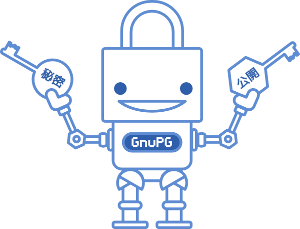 The goal of our Email Self-Defense guide is to show everyone that email encryption is a necessary, easy, and accessible way to fight mass surveillance with free software. We know that if we want to reach people around the globe, it's going to take more than one language. That's why today, we're proud to announce translations into German, Brazilian Portuguese, French, Russian, Turkish, and Japanese, as well as an ongoing effort to make the guide and infographic available in as many languages as possible. Mass surveillance is a global issue, with many governments and corporations colluding across borders to track us throughout our digital lives. Inter-country communication is particularly subject to government surveillance, as many states' privacy laws are much less protective of outsiders. These scary truths are part of the reason this translation project is important. We'd like to highlight that, while the FSF coordinated the translation process and maintains the Web site, all of the translation was done by volunteers. We're grateful to this international community of active free software supporters. While coordinating the translations, we've made improvements to the guide itself, incorporating feedback left by users on our LibrePlanet community wiki and from encryption experts. With the help of a volunteer, we even created Edward, a friendly email bot that helps Email Self-Defense users test their new encryption systems. Edward is free software under the GNU Affero Public License, and you can download his source code. We want to keep improving Email Self-Defense so that it can have the biggest impact possible. We're particularly interested in adding instructions for encryption on mobile devices, as well as an FAQ to help troubleshoot common problems. Can you donate to help us do this important work? If you don't have dollars, you're also welcome to donate in Bitcoin or Litecoin. This launch is just the beginning of an initiative to get Email Self-Defense translated into as many languages as possible. Spanish, Malayam, Korean, Romanian and Greek translations are currently underway. If you'd like to create a version for a language that we haven't published yet or help maintain one of the existing translations, please send an email to campaigns@fsf.org. Email Self-Defense is only one important piece of the solution to bulk surveillance. While we learn email encryption tools, we also need to push politically to reign in surveillance, build a safer Internet, and force governments and companies to reduce the amount of data they collect about us in the first place. We hope translated versions of Email Self-Defense can be the entry into this multifaceted movement for people all around the world. If you'd like to receive some of the messages on this list in Spanish or French as well as English, you can update your language preferences. Zak Rogoff Note: Please don't forward this email. It has a customized link for editing your contact information. You can view this post online at https://www.fsf.org/blogs/community/launching-translations-of-our-email-self-defense-guide. --Follow us on GNU social | Subscribe to our blogs via RSS | Join us as an associate member Sent from the Free Software Foundation, Unsubscribe from this mailing list. Stop all email from the Free Software Foundation, including Defective by Design, and the Free Software Supporter newsletter. |
Friday, June 20, 2014
Coming soon: Email Self-Defense in Spanish, German, Portuguese, and more
| Dear free software supporter, Two weeks ago, we released Email Self-Defense, our beginner's guide to fighting surveillance with free software email encryption. We had an outpouring of support from people who were happy to have a welcoming, accessible guide that also promoted free software and a reduction in the amount of data collected about people in general. We're excited to announce that volunteers are currently working on translating the guide and infographic into ten languages. Wow! In the meantime, we've also made some general improvements that will launch with the translations. In the coming weeks, we'll be announcing translations here, on our primary mailing list. If you'd like to receive some of the messages on this list in Spanish or French, you can update your language preferences. We try to give our translators an opportunity to work in teams and review each others' work, but there are some brave volunteers currently translating alone. Send an email as soon as possible to campaigns@fsf.org if you are fluent in Brazilian Portuguese, Romanian, Japanese, Malayalam, or Turkish and would like to help them. Zak Rogoff P.S. A US Supreme Court ruling made yesterday an important day for the fight against software patents. Check out our press release: US Supreme Court makes the right decision to nix Alice Corp. patent, but more work needed to end software patents for good. Note: Please don't forward this email. It has a customized link for editing your contact information. --Follow us on GNU social | Subscribe to our blogs via RSS | Join us as an associate member Sent from the Free Software Foundation, 51 Franklin St Boston, Massachusetts 02110-1335 United States Unsubscribe from this mailing list. Stop all email from the Free Software Foundation, including Defective by Design, and the Free Software Supporter newsletter. |
Thursday, June 12, 2014
We're glad you liked Email Self-Defense. Let's take it farther.
 Dear free software supporter, Last Thursday was a big day for defending our freedom and privacy on the Internet. The FSF and its supporters joined the ranks of thousands for Reset the Net, the biggest-ever day of action against bulk surveillance. All in all, it was a whopping success, with major Web sites commiting to improve their security and more than thirty thousand people visiting the FSF's brand-new Email Self-Defense guide. The Email Self-Defense guide, along with its infographic, made the rounds on reddit, Boing Boing, Slashdot, and Hacker News, and we think it's likely to become one of the Web's most popular guides to email encryption. It's also a powerful vector for the free software message, emphasizing the importance of computer user freedom for security more than other prominent guides. We want to promote tools like this guide in-person and online, to help as many people as possible learn to protect themselves using free software. Can you help us by joining the FSF as a member (if you aren't already), or donating $25? If you're not able to donate, you can still get people learning about free software encryption by sharing the infographic with the hashtag #EmailSelfDefense. If you're a fan of any encryption and privacy-related Web sites, email them and ask them to link to the guide. Most of all, you can make a point of using encryption yourself whenever possible -- even for messages that aren't sensitive. We're excited about all the offers we've received to translate the guide and infographic. Stay tuned for versions in a variety of languages coming soon. We've also gotten a lot of feedback on Email Self-Defense, and we see that people are rightfully excited about this project. Here are some of our favorite comments: "I haven't found a guide that's anywhere near this approachable for people scared of technology, and the infographic is also ace." "This is our opportunity to get my less-techy friends using encryption, while showing them why free software is important. Right on, FSF." Thanks to these commenters, and everyone in the free software community who participated in Reset the Net. Your actions give us hope for a future free of suspicionless bulk surveillance. And free software is going to be a big part of that future. Please join us as a member, or donate today. Zak Rogoff Follow us on GNU social | Subscribe to our blogs via RSS | Join us as an associate member Sent from the Free Software Foundation, 51 Franklin Street Fifth Floor Boston, Massachusetts 02110-1335 United States Unsubscribe from this mailing list. Stop all email from the Free Software Foundation, including Defective by Design, and the Free Software Supporter newsletter. |
Friday, June 6, 2014
Join the FSF and allies: strengthen the Tor anti-surveillance network
| Hi free software supporter, We're joining our allies at the Electronic Frontier Foundation (EFF), the Tor Project, and Freedom of the Press Foundation in kicking off the Tor Challenge, an effort to strengthen the global Tor network that protects Internet traffic from surveillance. Tor is a publicly accessible, free software-based system for anonymizing Internet traffic. Tor relies on thousands of computers around the world called relays, which route traffic in tricky ways to dodge spying. The more relays, the stronger and faster the network. That's where you come in: Tor is used by journalists, political dissidents, and everyday folks around the world. In fact, it was used by Edward Snowden for his famous leaks. The FSF is proud to run our own Tor relay as well. We've long been supporters of Tor, and we're pumped to join our allies in promoting it. As we write this, there have already been 370 new relays set up in the past two days. Let's help double that! To learn about more tools and actions you can take to secure privacy for yourself and your community, see the FSF's bulk surveillance page. For a discussion of pushing back bulk surveillance on a mass scale, read Richard Stallman's article "How Much Surveillance Can Democracy Withstand?". Zak Rogoff Follow us on GNU social | Subscribe to our blogs via RSS | Join us as an associate member Sent from the Free Software Foundation, 51 Franklin Street Fifth Floor Boston, Massachusetts 02110-1335 United States Unsubscribe from this mailing list. Stop all email from the Free Software Foundation, including Defective by Design, and the Free Software Supporter newsletter. |
